
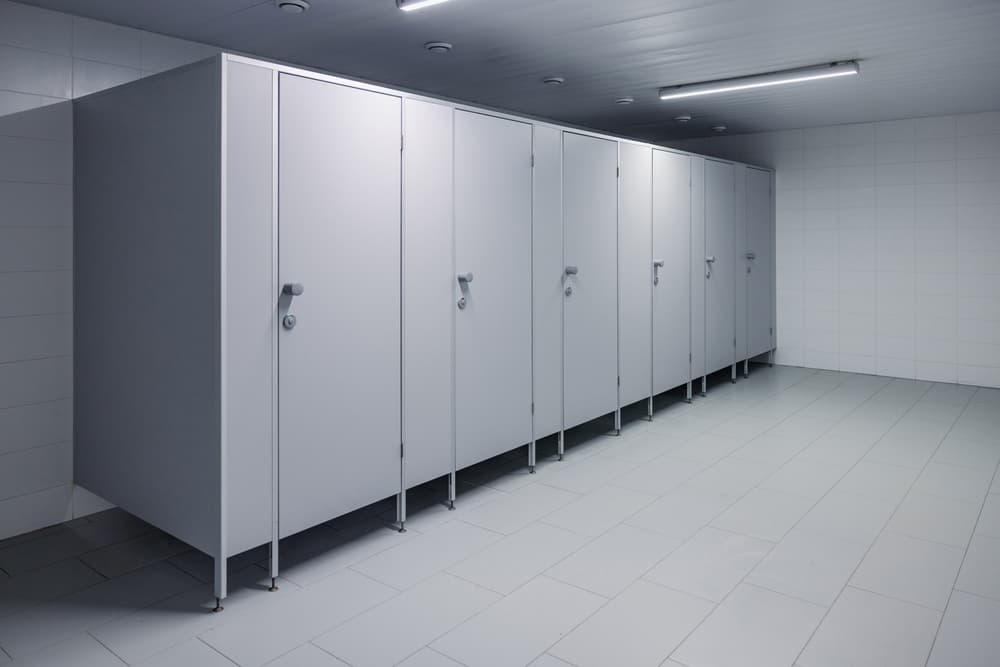
At MP Fittings, we know that Workplace toilet cubicles play an important role in providing safe, comfortable and compliant facilities for employees. They contribute to privacy, hygiene and accessibility, and form a key part of an employer’s legal responsibility to provide suitable welfare facilities.
Why workplace cubicles matter
Under UK workplace health and safety guidance, employers must provide suitable and sufficient toilets and washbasins. These must be clean, well ventilated, properly lit and supplied with hot and cold running water, soap and hand drying facilities.
Ensuring the right number of cubicles and choosing durable, hygienic materials can make day-to-day use more comfortable while supporting legal compliance.
Legal requirements at a glance
UK workplace welfare guidance sets out clear expectations for toilet facilities. Employers must provide:
- Enough toilets and washbasins for the number of employees
- Separate facilities for men and women, or single-use rooms with lockable doors
- Toilet paper and sanitary bins where required
- Soap, water and suitable hand drying options
- Clean, well-maintained, ventilated facilities
These legal requirements form the basis for deciding how many cubicles are needed and what level of quality is appropriate in a workplace environment.
Number of cubicles required
The number of cubicles required is based on staff numbers and whether the facilities are mixed-use or separated.
Typical guidance includes the following:
For mixed-use or female-only toilets:
- 1 to 5 people: 1 cubicle and 1 washbasin
- 6 to 25: 2 cubicles and 2 washbasins
- 26 to 50: 3 cubicles and 3 washbasins
- 51 to 75: 4 cubicles and 4 washbasins
- 76 to 100: 5 cubicles and 5 washbasins
For every additional 25 people, add one more cubicle and one washbasin.
For male-only toilets, the required number of toilets can be reduced if urinals are installed, as long as adequate washbasins are provided.
If toilets are used by both employees and visitors or customers, provision should be increased accordingly.
Accessibility and inclusivity
Workplaces must consider accessibility needs. Under the Equality Act and UK building regulations, accessible toilet facilities should include:
- A wider door for wheelchair access
- Grab rails and transfer space
- Low height fixtures and fittings
- An emergency alarm system
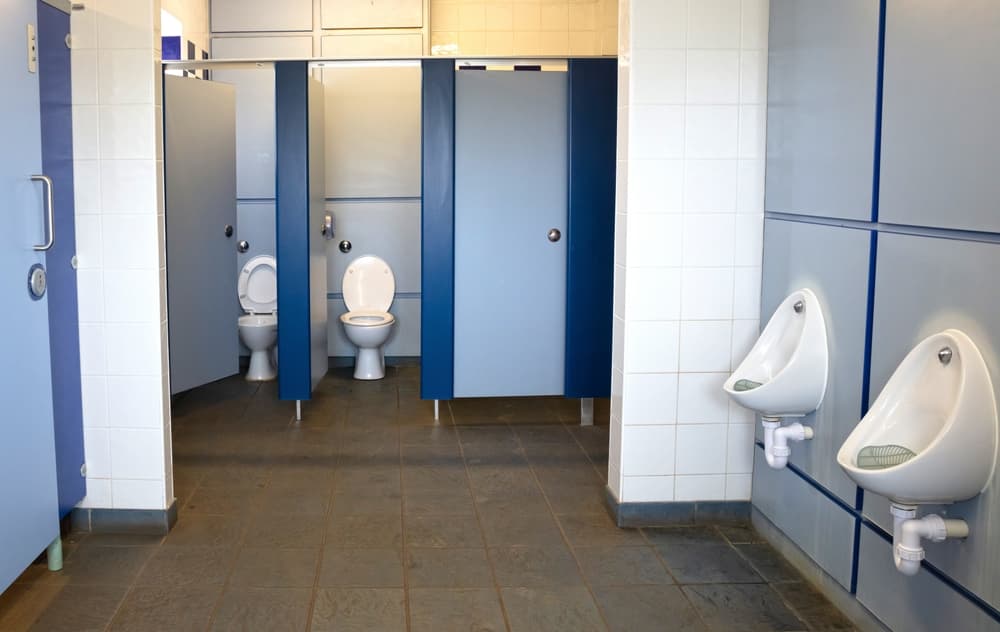
Providing at least one accessible cubicle that can be used by anyone who needs additional support is considered best practice in most workplaces.
Customisation and design considerations
Workplace cubicles are available in a wide range of finishes and configurations. When choosing a system, consider:
- Colour schemes, from neutral tones to bold branding colours
- Modular or bespoke layouts to suit unusual room shapes
- Hardware options such as quick-fit latches, indicator bolts or anti-vandal fittings
- Full height or standard height cubicles, depending on privacy requirements
MP Fittings offers an extensive range of hardware and panel options suitable for both commercial and high-traffic environments.
Noise and privacy
Noise control is an important factor, especially in offices and workplaces where privacy is valued. While cubicles cannot be completely soundproof, you can improve acoustic performance by:
- Selecting thicker or acoustic-rated materials
- Using full-height doors and partitions
- Minimising gaps around doors
- Choosing layouts that separate cubicles from busy areas
These measures help create a quieter and more comfortable washroom experience.
Sustainability and eco-friendly options
Many organisations are adopting more sustainable procurement policies. Workplace cubicles can support this through:
- Panels manufactured from recycled or responsibly sourced materials
- Low VOC coatings and finishes
- Durable materials that reduce the need for frequent replacement
Suppliers can often provide information on the environmental performance or sourcing of their materials.
Installation and timeframes
Professional installation ensures cubicles are fitted securely and within the correct tolerances. Typical installation guidance includes:
- Smaller washrooms can usually be completed in one to two days
- Larger or bespoke systems may take longer
- Work can often be scheduled to minimise disruption to daily operations
MP Fittings supports customers throughout the planning and installation process to help ensure smooth project delivery.
Cleaning and maintenance
Regular cleaning and maintenance keep cubicles looking good and functioning effectively. Recommended practices include:
- Daily cleaning with non-abrasive, mild detergents
- Disinfecting touchpoints such as locks, handles and flush controls
- Checking hinges and fixings for wear
- Avoiding harsh chemicals that may damage laminate or coated surfaces
- Periodic deep cleaning to remove buildup in less accessible areas
Choosing durable materials such as compact laminate or powder-coated aluminium helps ensure long-term performance.
Health and safety considerations
Health and safety play an important role in cubicle selection. Consider:
- Fire-rated materials suitable for commercial buildings
- Antibacterial coatings that help reduce surface contamination
- Anti vandal hardware for schools, leisure centres or high traffic spaces
- Adequate lighting and ventilation
- Appropriate waste disposal facilities
These factors support a safe, comfortable and legally compliant washroom environment.
Workplace Cubicles from MP Fittings
Workplace cubicles are a key part of creating a practical, compliant and pleasant washroom. By understanding legal requirements, accessibility needs, material choices and maintenance responsibilities, employers can make informed decisions that benefit both staff and visitors.
If you are planning new workplace cubicles or a washroom refurbishment, contact us today. MP Fittings can provide expert advice and a wide range of components to help you build the right system for your space.